

Schools should be places for learning. But they often sound like something else entirely. Chairs scraping. Conversations bouncing off the walls. A teacher’s voice lost in a wash of reverberation. It’s easy to think that’s just “what schools are like.” But the sound environment does more than cause distraction. It affects how children understand, remember, and stay focused.
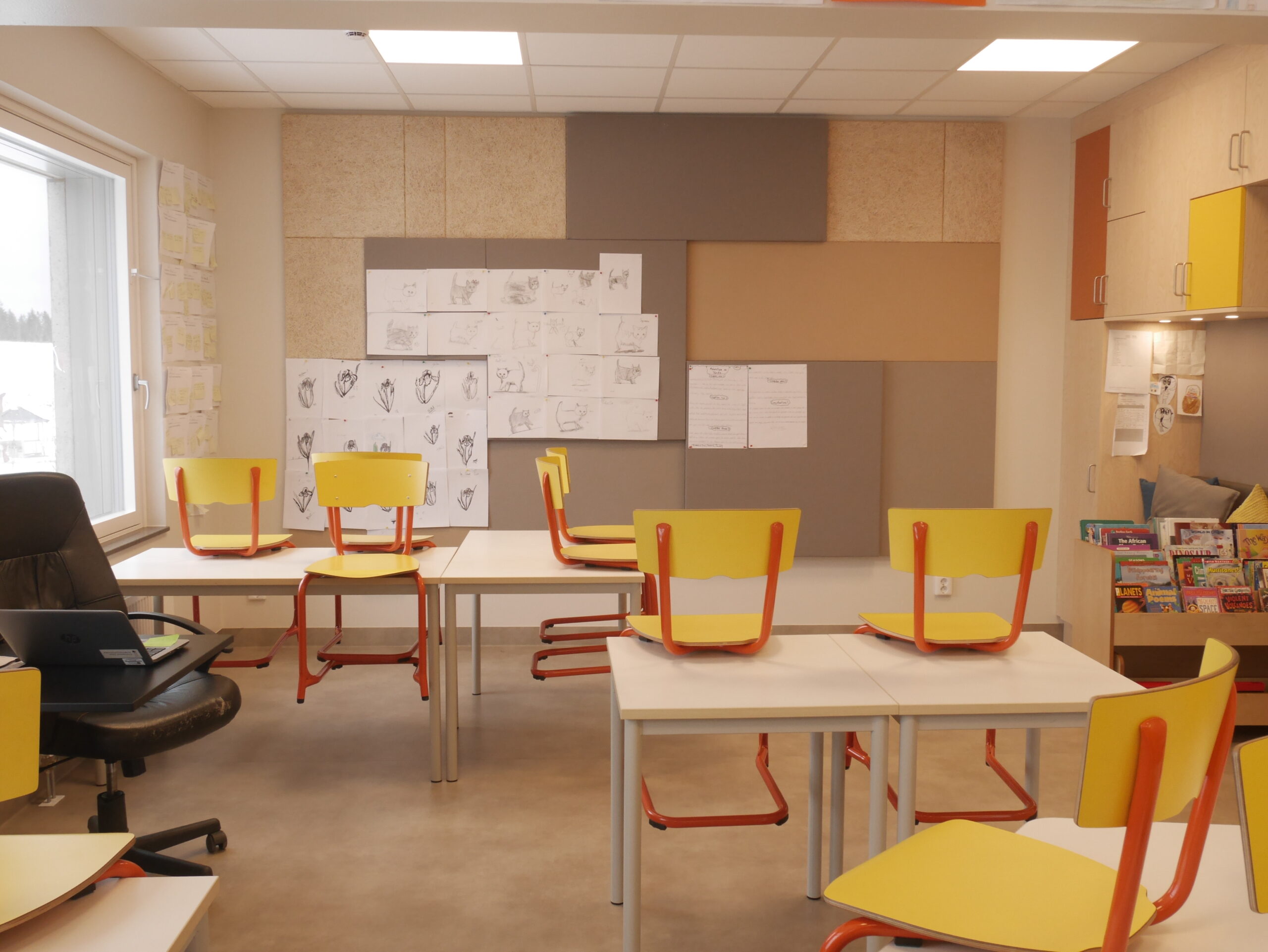
That’s why acoustics in schools go beyond comfort. They shape the conditions for learning. The right reverberation time can make the difference between following along and losing track. In this article, we look at why the sound environment matters so much in classrooms and how thoughtful acoustic planning can help create calmer conditions for learning.
Why are acoustics in schools so important?
Children are more sensitive to noise than adults.
Their brains are still developing, so they find it harder to filter out irrelevant sounds. Learning also places high demands on cognitive resources, especially language comprehension and working memory.
Research shows that noise in school environments can affect:
- Reading skills
- Memory function
- Attention
- Language development
- Stress levels
Noise affects everyone, but especially students who have difficulty concentrating or whose first language differs from the language of instruction. Good acoustics in schools are therefore also a matter of inclusion.
What is reverberation, and why does it affect focused learning?
Reverberation time is the time it takes for a sound to decrease by 60 decibels after the sound source stops.
In classrooms with many hard surfaces, such as concrete, plaster, and glass, sound continues to bounce around the room. This means:
- The teacher’s voice becomes less clear
- Students’ conversations carry farther
- The overall noise level increases
When the reverberation time is too long, sounds linger in the room, as if they’re “hanging in the air.” This creates a constant background of sound that makes it harder to focus.
The right reverberation time in a classroom is essential for speech intelligibility and focused learning.
How does noise affect student performance?
Speech is particularly distracting in classrooms. The brain can’t simply tune out language. When several conversations happen at once, students’ brains automatically try to interpret them.
This increases cognitive load, reduces concentration, and eventually leads to mental fatigue. It’s a little like trying to read a book while several people talk around you.
Teachers are affected too. Prolonged exposure to high noise levels can lead to voice problems and increased stress.
Guidelines for classroom acoustics
Many countries have recommended guidelines for reverberation time in teaching spaces. In general, classrooms should have a shorter reverberation time than office environments, often around 0.5 seconds or less, depending on room size.
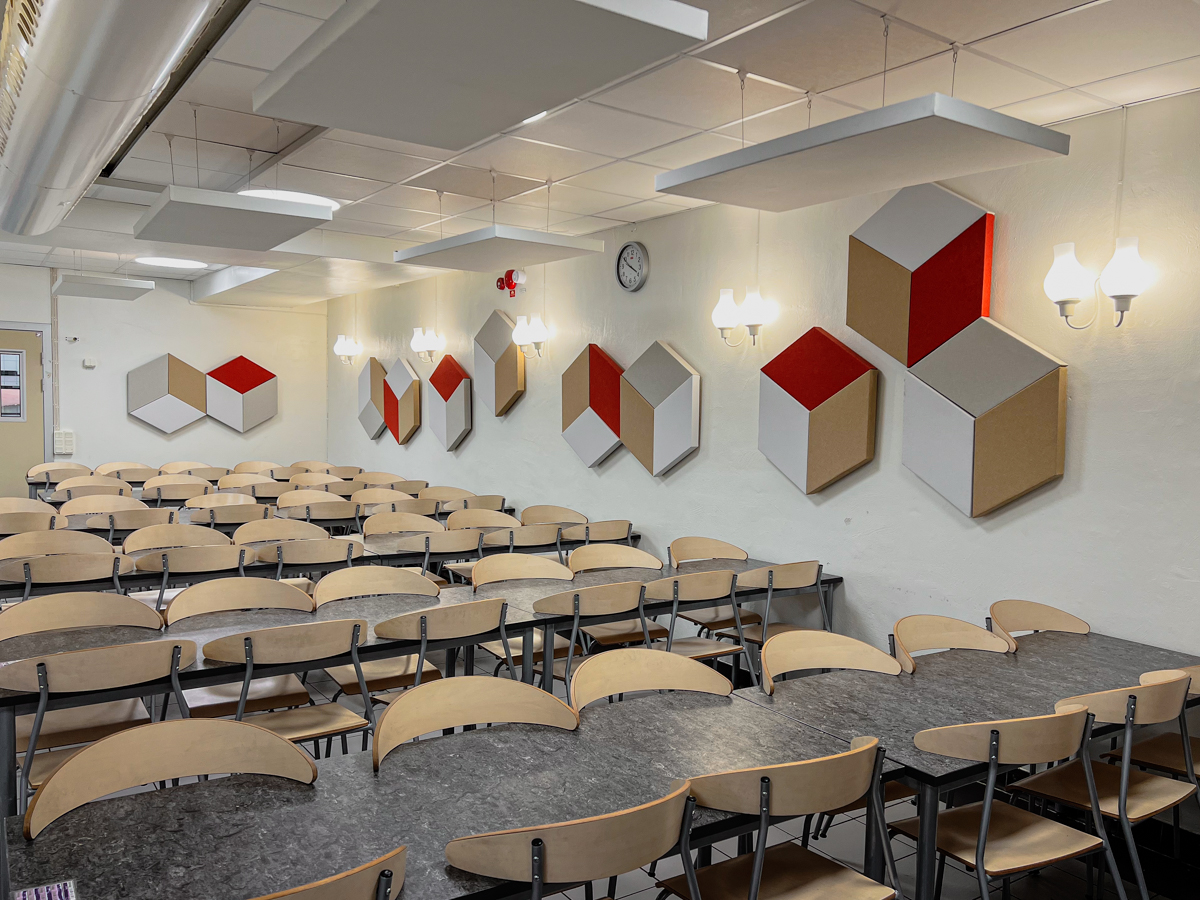
In Sweden, an updated standard for the sound environment in teaching spaces, SS 25268:2023, has been in place since 2023. It describes how classrooms should be designed to achieve good acoustics and includes both target values and practical measures. For example, it states that roughly 8 percent or more of a classroom’s wall area should be fitted with sound absorbers to complement ceiling absorption and effectively break up sound reflections.
The younger the students, the more important speech clarity becomes. When sound keeps bouncing around the room, it becomes harder to understand the teacher’s voice, and background sounds travel farther than necessary.
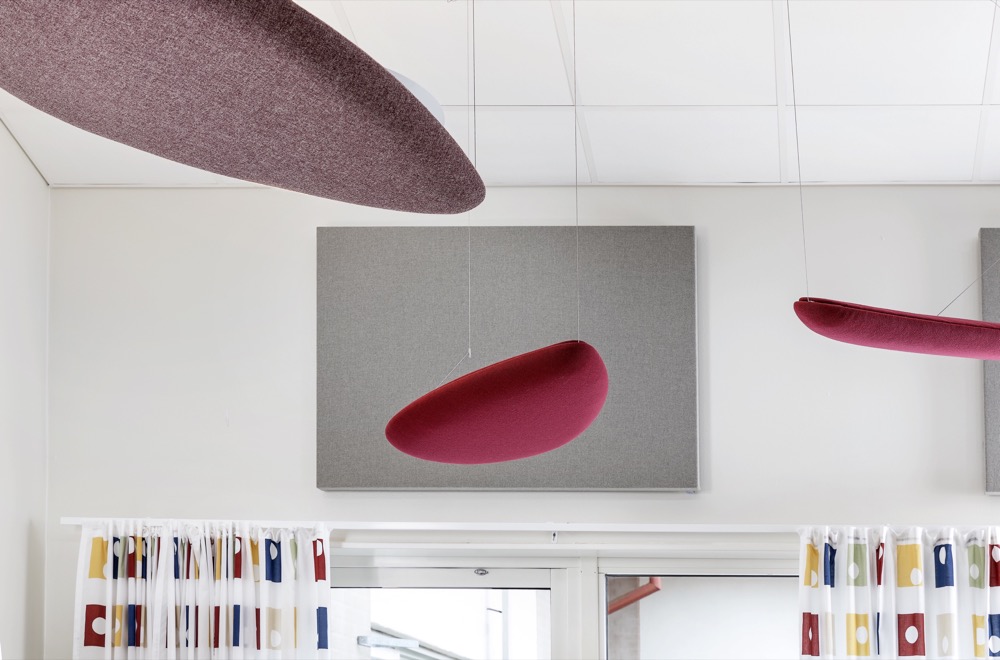
Achieving the right values therefore takes more than installing a suspended ceiling. It requires the right combination of ceiling and wall absorption.
Common acoustic shortcomings in schools
Despite clear guidelines, acoustic shortcomings are still common in schools. One reason is that the updated standard is relatively new. Many schools were built long before today’s requirements for the sound environment existed, so their classrooms often fall short of current requirements.
Typical problems include:
- A standard suspended ceiling with no additional absorption
- Hard floors and glass partitions
- No wall absorption
- Furniture layouts that do not account for sound spreading through the room
In older schools, the problem is often insufficient sound absorption, because the classrooms were built to earlier guidelines. In newer schools, the challenge may instead be large, open learning environments, where sound can easily travel between different activities unless acoustics are carefully planned.
How can you create a calmer learning environment?
1. Reduce reverberation time
Good acoustics in schools start with enough sound absorbers and the right choice of absorbers and materials. Ceiling absorbers are often the first step, but they are rarely enough on their own. Wall absorbers complement them by breaking up reflections between parallel surfaces.
2. Position sound absorbers strategically
Sound absorbers should be placed:
- On the ceiling above the teaching area
- On opposing walls
- Near sound sources
Distributing absorbers around the room creates better acoustic balance than concentrating them on a single surface.
Open learning environments: a particular challenge
Many schools now use flexible, open learning environments.
These spaces require more careful acoustic planning.
They need:
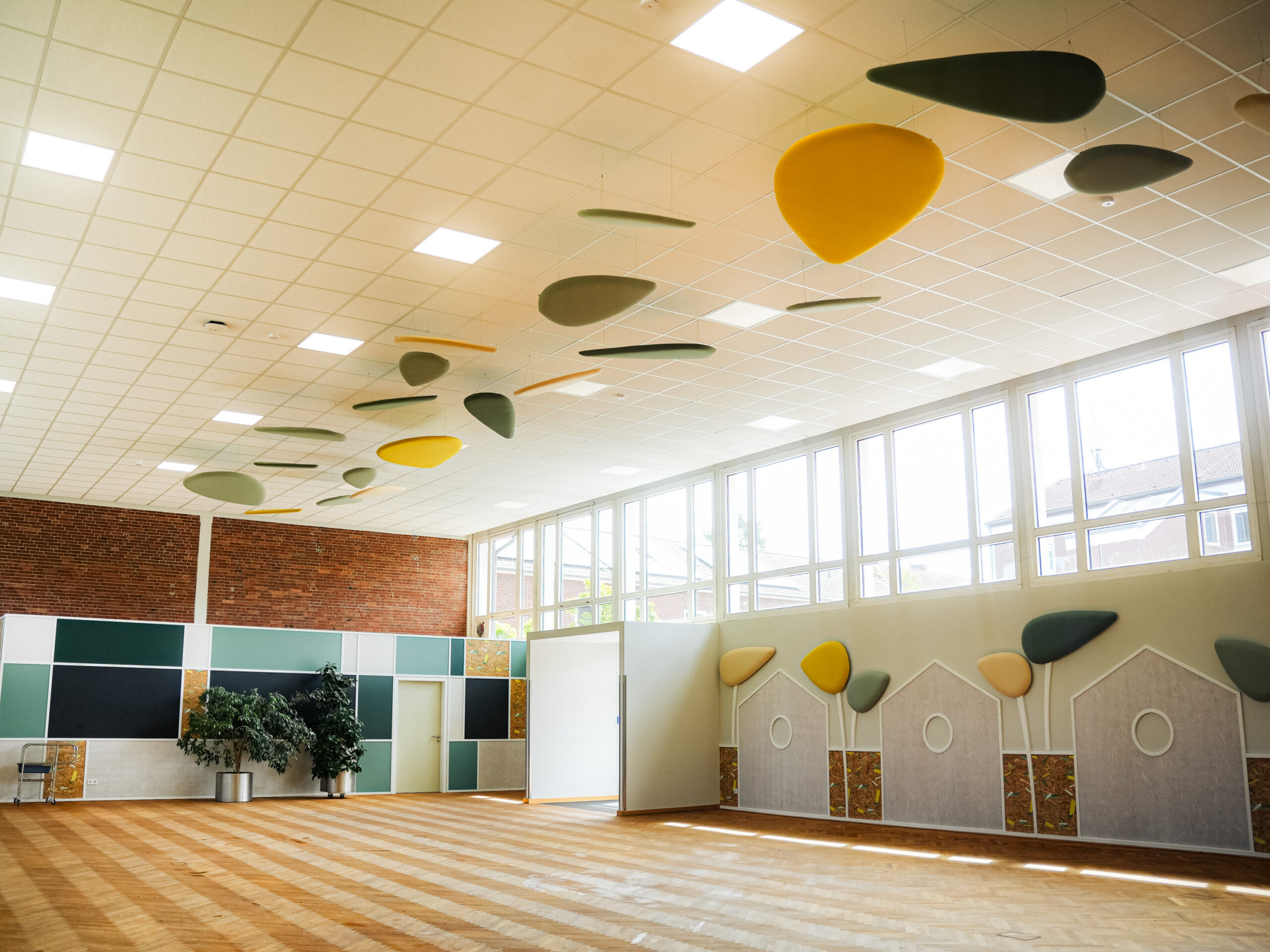
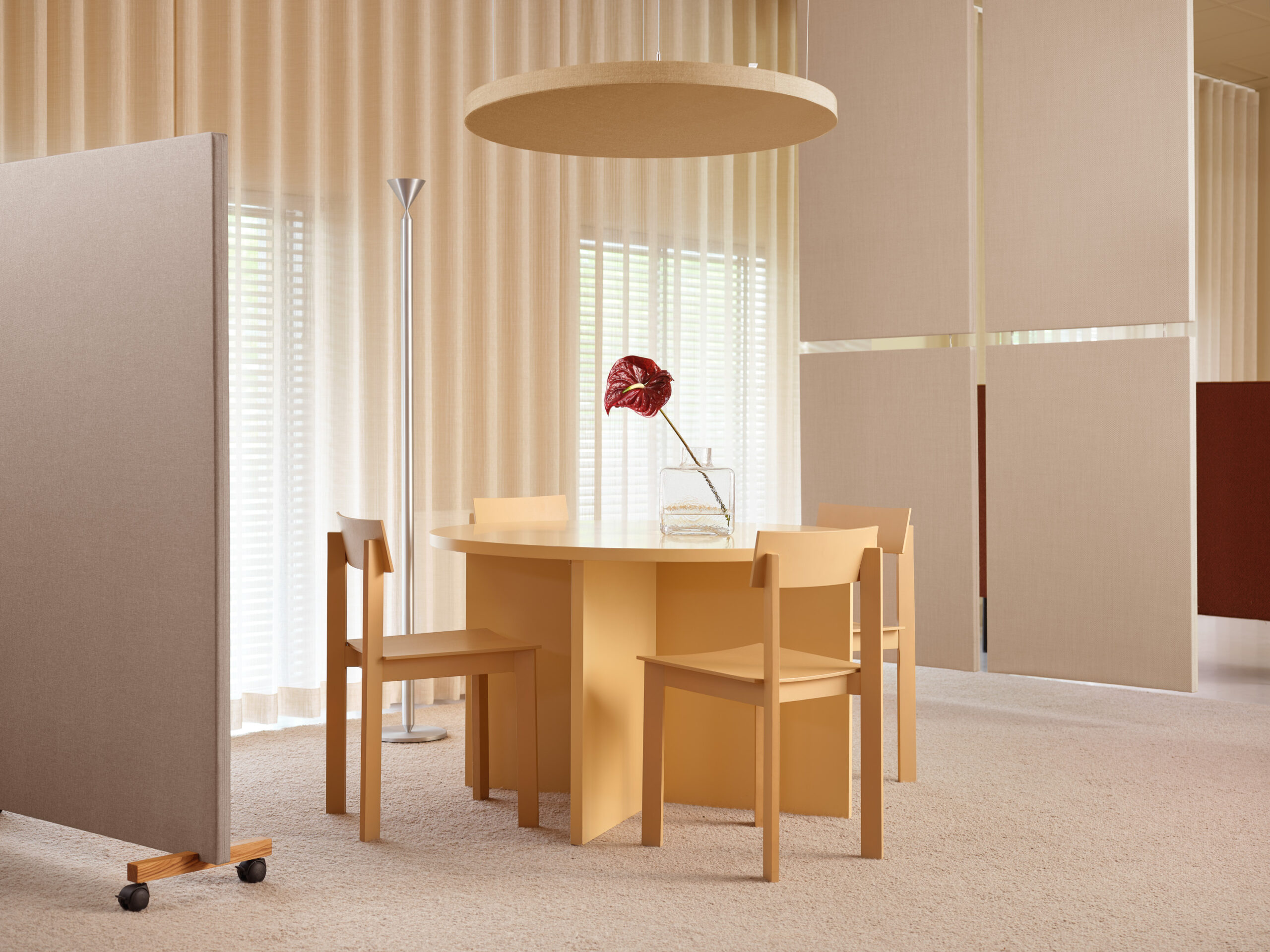
- A combination of ceiling and wall absorbers
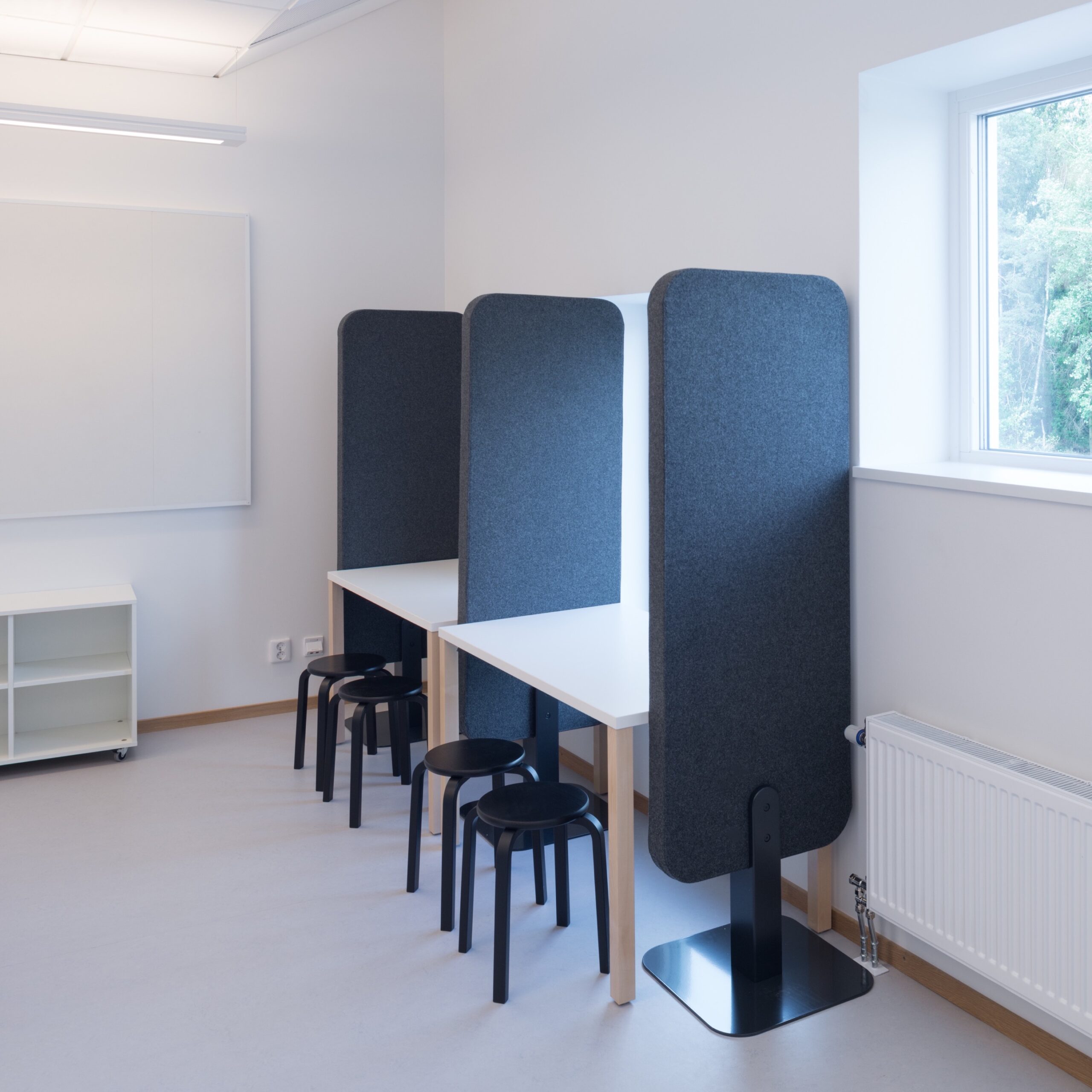
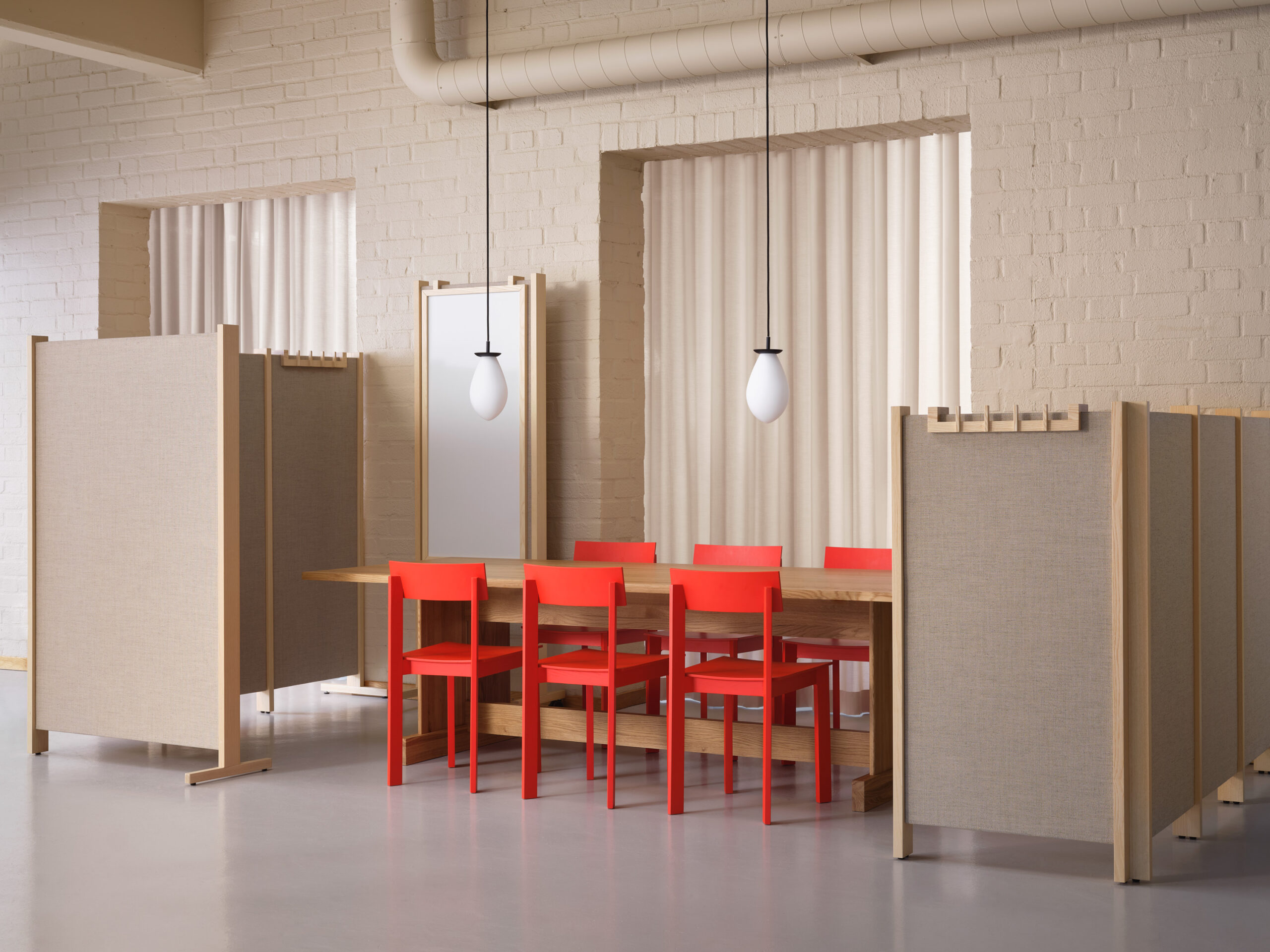
- Screens to define different zones
- Room-within-a-room solutions for smaller groups
The aim is to allow activities to take place at the same time without sound spreading uncontrollably.
Acoustics and inclusion
Good acoustics are especially important for students with hearing loss, students with neurodevelopmental conditions, and those whose first language differs from the language of instruction. For these groups, noise can be a major barrier to learning. A well-planned sound environment is therefore part of a school’s work to provide equitable learning conditions.
Teachers’ working environment
Poor acoustics also have a significant impact on teachers. In a noisy room, people tend to raise their voices without realizing it. This can lead to vocal fatigue, voice problems, and, over time, increased stress. The right sound absorbers in a classroom reduce the need to speak loudly, improving the working environment.
A carefully planned sound environment supports both students’ ability to focus and teachers’ working conditions. Schools that invest in better acoustics can make teachers’ working days more sustainable over the long term, while becoming more attractive workplaces at a time when many education providers are competing for qualified teachers.
An investment or an expense?
Improving acoustics is sometimes seen as an expense in the facilities budget. In practice, it is an investment in student performance, teachers’ working conditions, and a more sustainable school environment over time, while reducing the risk of sick leave. A properly sized acoustic solution lasts and contributes to better outcomes.
A practical example
A classroom measuring 60 m², with a ceiling height of 3 meters and hard surfaces, often needs more than a standard suspended ceiling to achieve the right reverberation time.
An effective solution may include:
- High-performance ceiling absorbers
- Wall absorbers along the room’s long walls
- Additional screens in larger spaces, if needed
An acoustic calculation provides a precise basis for determining how much absorption is needed.


Summary: Focused learning starts with the room
Acoustics in schools affect:
- Speech intelligibility
- Concentration
- Stress levels
- Learning
The right reverberation time creates calmer classrooms with better conditions for both students and teachers.
It’s not about asking children to be silent. It’s about making sure the room handles sound effectively.
Would you like to improve the sound environment in your school?
We can help you by analyzing reverberation, calculating your absorption needs, and recommending the right combination of ceiling and wall absorbers.
Book a free consultation and create calmer conditions for learning with thoughtful acoustic planning.